← All reports
Deep-Dive Market Intelligence
TRADE
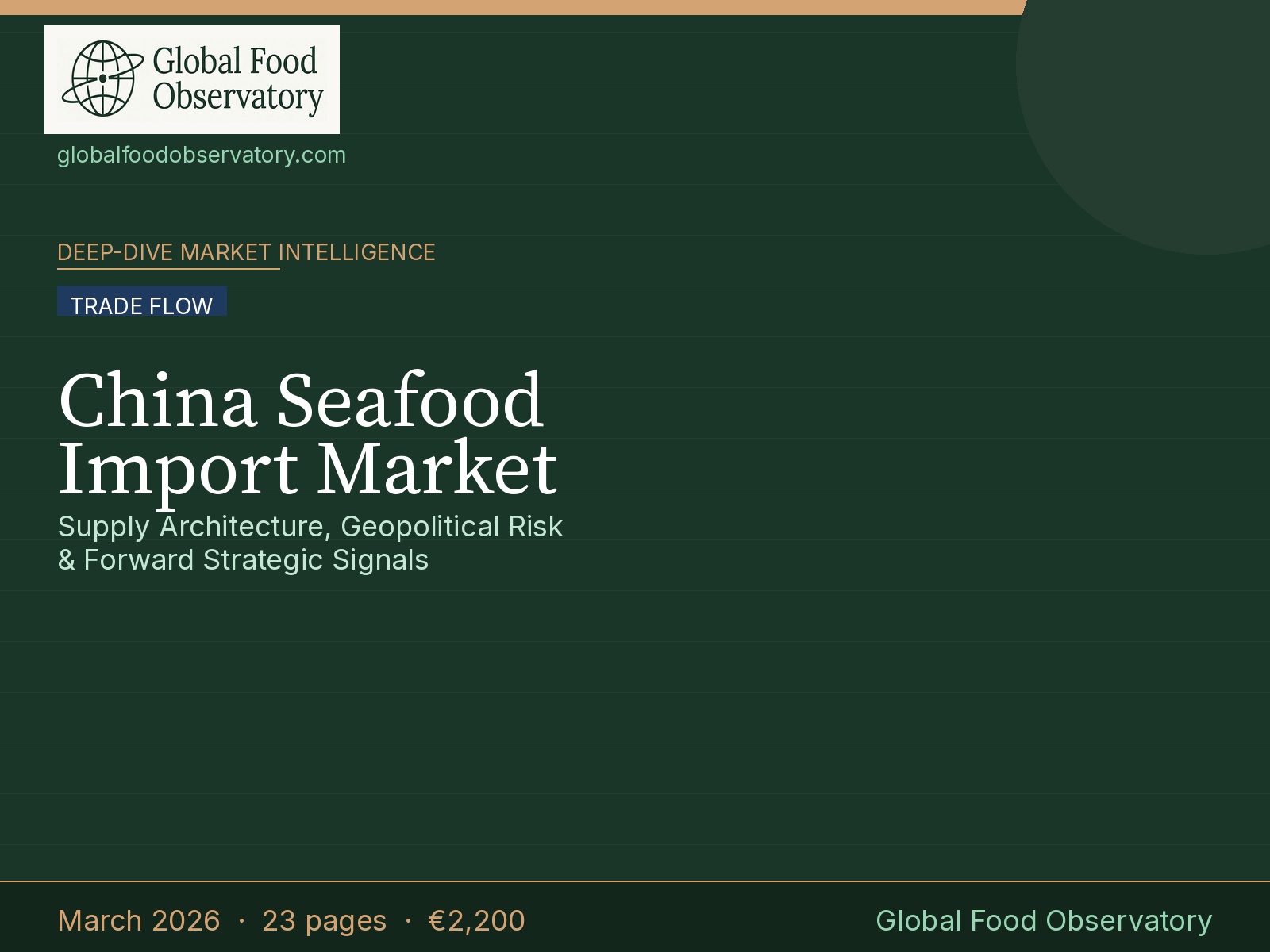
China Seafood Market
Global Food Observatory
·
March 2026
·
18 pages
·
11,000 words
·
29 primary sources
USD 17.7bn
Annual Import Value
57.8M MT
Aquaculture Output
+23% YoY
Premium Import Growth
Middle Class
Key Driver
Executive Summary
China is simultaneously the world's largest seafood producer and one of its fastest-growing import markets. Despite aquaculture output exceeding 57 million MT annually, rising middle-class demand for premium species — salmon, lobster, crab and high-value white fish — is driving structural import growth that domestic production cannot satisfy. This GFO Special Report provides a fully-cited intelligence assessment of China's seafood import dynamics, regulatory environment, and trade flow outlook across 7 key species categories.
Key Findings
- Norwegian salmon import volumes recovered 34% YoY following diplomatic normalisation — now exceeding pre-2010 peak levels
- Live Canadian lobster imports constrained by air freight capacity and inspection bottlenecks at Shanghai Pudong
- Ecuador's white shrimp (Litopenaeus vannamei) dominates the mass-market segment with 41% volume share
- Japan seafood ban (post-Fukushima water release) creating supply void — Korea and Norway principal beneficiaries
- E-commerce channel (Alibaba Fresh, JD.com) now accounts for 28% of premium seafood retail — cold-chain investment surge
- Regulatory tightening on traceability (GB standards) creating non-tariff barriers for smaller-volume origins
- Russian pollock and crab trade flows under sanctions pressure — redirected through third-country processing hubs
Report Contents
- 1. Executive Summary & Methodology
- 2. China Seafood Consumption Fundamentals
- 3. Domestic Aquaculture: Capacity, Constraints & Species Mix
- 4. Import Market Analysis by Species (7 categories)
- 5. Origin Supplier Deep-Dives: Norway, Ecuador, Canada, Russia, Japan, Vietnam
- 6. Regulatory Framework: GB Standards, CIFER Registration, Traceability
- 7. Retail & E-Commerce Channel Dynamics
- 8. Japan Ban Impact Assessment
- 9. Trade Flow Projections 2026–2028
- 10. GFO Analytical Conclusions & Strategic Recommendations
- 11. Full Bibliography (29 Primary Sources, 7 Signal Categories)
Methodology — All analysis is built from primary institutional sources.
Every data point carries a named source citation at point of use.
Forecasts and scenario projections are clearly distinguished from verified data.
Full bibliography included in the report.
€2,200
One-time purchase
Purchase Report →
Secure checkout via Lemon Squeezy · Instant PDF delivery
What you receive
- ✓Full PDF report (18 pages)
- ✓11,000-word analysis
- ✓29 primary sources, fully cited
- ✓Trade flow modelling to 2028
- ✓GFO Decision Pathways per actor type
- ✓No subscription required
Intelligence subscribers receive a 5% discount at checkout.
View all GFO reports ↗