How the World Eats / Chapter 6 of 8
What causes shocks and shortagesThe six forces that disrupt the system, and the episodes that taught the market most
Food shortages rarely have a single cause. A drought, a disease, a war or a policy decision starts the trouble. What turns it into a crisis is how the shock spreads, and how thin the system's buffers are when it arrives.
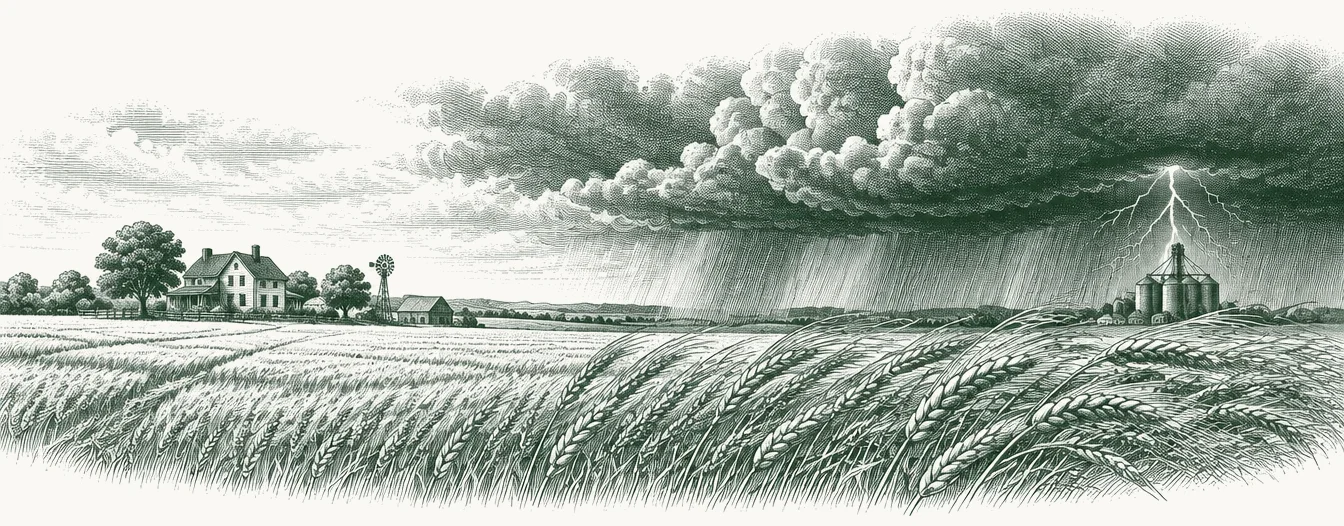
How a shock works
Most food shocks follow the same four steps. This is a simple way of thinking about them, not a formal model.
- Trigger. Something reduces supply or blocks trade: a failed harvest, an outbreak, a war, an export ban.
- Transmission. The effect travels along the chain and across borders. Buyers look for other suppliers, prices rise in world markets, and importers far from the original problem feel it.
- Amplification. Reactions make it worse. Exporting countries restrict sales to protect their own consumers. Importers rush to buy and build stocks. Traders and investors price in risk.
- Response. Farmers plant more, governments release reserves, trade reroutes, and prices eventually fall. This can take months or years.
The third step is often the most important. Many of the worst price spikes of the past two decades were driven less by the original shock than by the reaction to it.
Why buffers decide how bad it gets
The system has shock absorbers. The main ones are:
- Stocks. Grain and other food held in storage by governments, traders and processors.
- Alternative suppliers. Other countries that can increase exports when one supplier fails.
- Substitutes. Other foods that buyers can switch to: one grain for another, one vegetable oil for another.
- Money. The ability of importing countries to pay higher prices without cutting consumption.
When buffers are thick, a shock produces a small rise in price. When they are thin, the same shock can produce a spike.
Why buffers matter
That is why GFO watches stock levels and export concentration as closely as it watches weather and disease. The state of the buffers often tells you more about the likely price reaction than the shock itself.
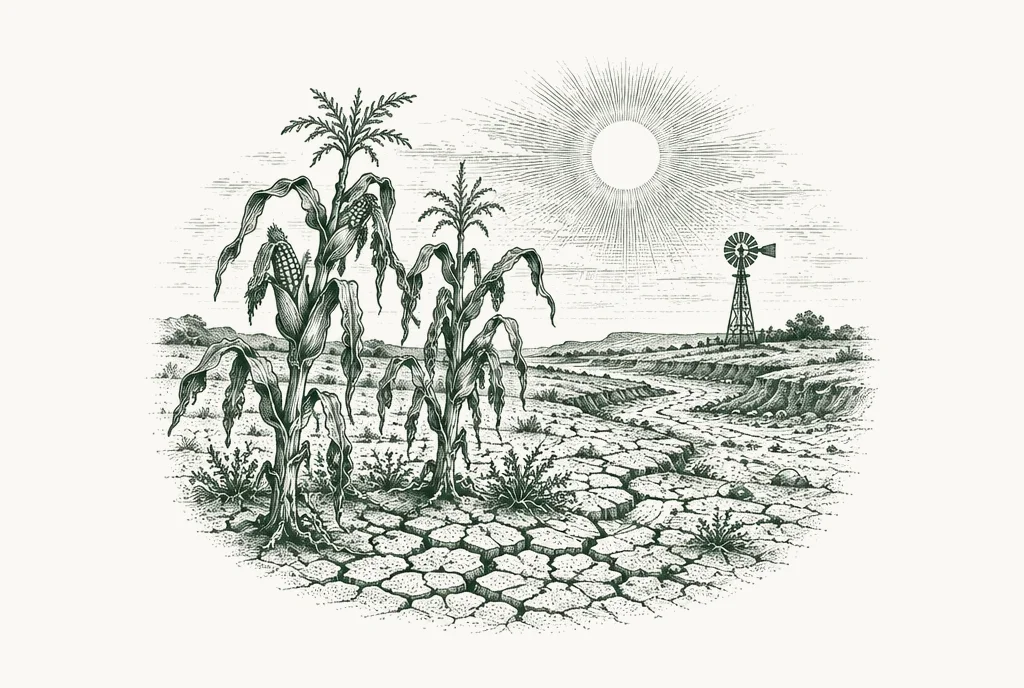
Signal domain 1 of 6
Climateweather, water and extremes
- Triggers
- Drought, flood, heat, frost, storms
- Hits first
- Production, then transport
- Classic case
- Russian drought, 2010
Weather has always been the biggest source of uncertainty in farming. What is changing is how often extreme events occur, and how they combine.
What it is. Droughts, floods, heatwaves, storms, frosts and shifts in seasonal patterns such as the monsoon or El Niño.
How it causes shocks. It cuts yields directly, and it can disrupt transport: low river levels, drought at the Panama Canal, flooded roads and ports (Chapter 4).
Disasters of all kinds, including extreme weather, pests, disease and conflict, are estimated to have destroyed US$3.8 trillion of crop and livestock production over the past 30 years, an average of US$123 billion a year or around 5% of global agricultural GDP 2. The same report found that the number of disaster events rose from around 100 a year in the 1970s to around 400 a year over the past 20 years 2.
The pattern to watch. A single bad harvest in one region can usually be absorbed. The danger is when several major producers suffer at the same time, or when a bad harvest hits while stocks are already low.
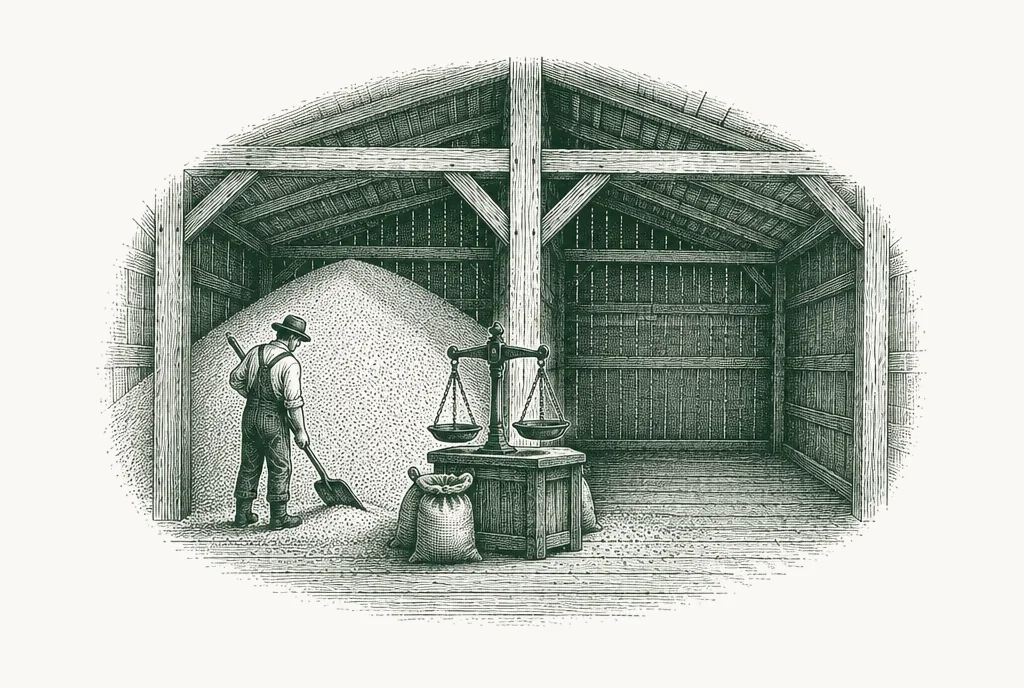
Signal domain 2 of 6
Supplyproduction, stocks and inputs
- Triggers
- Poor harvests, low stocks, input shortages
- Hits first
- Farms and processors
- Classic case
- Stocks-to-use ratios tell the story
What it is. How much is produced, how much is in storage, and whether farmers have the inputs they need.
How it causes shocks. A shortfall in production, a fall in stocks, or a shortage of inputs such as fertiliser, feed or energy. Input shocks are the least visible and often the slowest to show. A spike in fertiliser prices this season can lower yields next season.
Supply shocks are also where the slow response of farming matters most (Chapter 1). When supply falls, farmers cannot quickly produce more. Livestock and tree crops take years to rebuild.
The pattern to watch. Watch the ratio of stocks to consumption, not just production. A large harvest in a year when stocks are low can still leave a market tight.
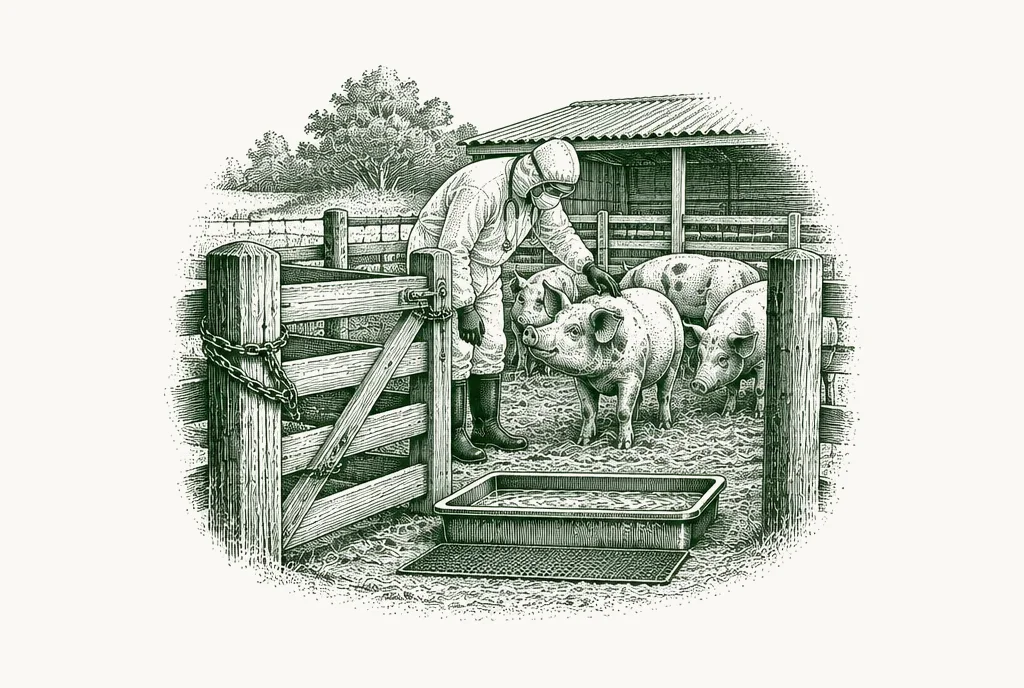
Signal domain 3 of 6
Biosecuritydisease, pests and the bans that follow
- Triggers
- Animal and plant disease, pests
- Hits first
- Farms, then export access
- Classic case
- Swine fever in China, 2018–20
What it is. Animal and plant diseases and pests, and the trade restrictions that follow them.
How it causes shocks. Outbreaks can wipe out large parts of a country's livestock or crops. They also close export markets, because importers ban products from affected countries or regions to protect their own farms.
The clearest recent example is African swine fever in China. Chinese government statistics showed the national pig herd down by more than 40% year on year by October 2019 5. A 97% rise in pork prices accounted for more than half of the increase in China's consumer price index in December 2019 5.
The effect spread worldwide. USDA forecast China's pork production would fall from 54 million tonnes in 2018 to 36 million tonnes in 2020, while its imports would more than double to a record 3.7 million tonnes 5. Pork exporters in Europe, the Americas and elsewhere saw demand surge, and feed demand in China fell.
Avian influenza, foot-and-mouth disease and plant pests follow similar patterns on a smaller scale.
The pattern to watch. Biosecurity shocks hit two ways at once: they cut supply in the affected country and they close its export markets. Exporters that stay disease-free can gain.
The original shock is rarely the whole story. The reaction to it often does more damage.
Signal domain 4 of 6
Tradebans, tariffs and sanctions
- Triggers
- Export bans, tariffs, sanctions
- Hits first
- Importing countries
- Classic case
- Export restrictions, 2008 and 2022
What it is. Tariffs, quotas, export bans, sanctions, trade disputes and trade agreements.
How it causes shocks. Governments can stop food leaving their country, or stop it arriving, overnight. Export restrictions are the most damaging, because they remove supply from the world market just when importers need it most.
This is the amplification step in action. In the 2007–08 food price crisis, 19 countries had imposed export restrictions by the end of April 2008, affecting 15.3% of global trade in calories 4. In 2022, after the war in Ukraine began, restrictions peaked in late May, when almost 17% of global food and feed exports by calories were affected, imposed by 23 countries (IFPRI, 2023). Indonesia's limits on palm oil exports alone accounted for about a third of the affected calories (IFPRI, 2023).
The pattern to watch. Export restrictions spread. When one major exporter restricts sales, others often follow to protect their own consumers, and importers rush to buy. The result can be a spike that outlasts the original shortage.
Signal domain 5 of 6
Regulationstandards, limits and proof
- Triggers
- Residue limits, standards, sustainability rules
- Hits first
- Exporters and processors
- Classic case
- Usually slow, and announced in advance
What it is. Food safety standards, residue limits, labelling rules, sustainability and traceability requirements, and plant and processing approvals.
How it causes shocks. Regulation rarely causes sudden shortages, but it can shut an exporter out of a market, change what products are allowed, or add costs that reshape trade. A change in a pesticide residue limit can exclude a crop overnight. The suspension of a meat plant's export licence can cut off a country's access to a major market.
Sustainability rules are a growing force. The European Union has adopted rules requiring that products such as soy, palm oil, beef, cocoa and coffee be shown to be free of recent deforestation, though their timing has shifted. Rules like these change what exporters must prove to reach a market.
The pattern to watch. Regulatory shocks are usually slower and more predictable than the others. They are announced, consulted on and phased in. That gives exporters time to adapt, if they are watching.
Signal domain 6 of 6
Pricewhere every shock shows up
- Triggers
- Energy, currency and benchmark moves
- Hits first
- Importers and consumers
- Classic case
- Record world prices, March 2022
What it is. The movement of prices through the chain, from benchmark markets to what farmers earn and consumers pay.
How it causes shocks. Price is usually where every other shock shows up. But price movements can also create shocks of their own. A spike in energy prices raises the cost of fertiliser, transport and processing all at once. A currency collapse makes imported food much more expensive, even if world prices are stable. And sharp price rises can trigger the export restrictions and panic buying described above.
The FAO Food Price Index, which tracks world prices of a basket of traded foods, reached its highest level since it began in 1990 in March 2022, averaging 159.3 points 1. World cereal prices and vegetable oil prices both hit record highs that month 1.
The pattern to watch. World prices and local prices are not the same. Currency movements, local taxes and transport costs mean that a fall in world prices does not always reach consumers, and a rise can hit some countries far harder than others.
The episodes that taught the market most
A handful of episodes shaped how the food industry and governments think about shocks.
Food shocks since 2007
2007–08. A combination of high oil prices, rapid growth in biofuel demand, low stocks and poor harvests drove grain and oilseed prices sharply higher. Export restrictions spread, and rice prices spiked. The crisis showed how quickly policy reactions can amplify a shortage.
2010–11. A severe drought in Russia led to a ban on grain exports, and prices rose again. The episode reinforced the lesson of 2008: the reaction of exporting governments matters as much as the harvest.
2018–20. African swine fever devastated China's pig herd, reshaped world meat trade, and cut Chinese demand for feed. It showed how a single disease in a single country can move global markets for years.
2020. The COVID-19 pandemic disrupted labour, processing and transport. Some countries restricted exports, affecting about 8% of traded calories at the peak in May and June 2020 3. Food mostly kept flowing, but the episode exposed weak points in processing and logistics.
2022. War in Ukraine cut exports from two of the world's largest suppliers of wheat, corn and sunflower oil, while energy and fertiliser prices surged. Russia and Ukraine together accounted for 12% of total calories traded 3. World food prices reached record highs, and export restrictions spread again.
Each episode combined several of the six forces. None was caused by one alone.
How GFO rates a signal
GFO's weekly signals classify every development by strength.
- ▲ Early SignalSomething new or unusual that may matter, but where the evidence is still limited.
- ▲▲ Emerging TrendA development supported by several data points or a clear pattern over time.
- ▲▲▲ Structural ShiftA change in how a market works over a sustained period, such as its capacity, policy regime, production geography or trade architecture. A Structural Shift requires at least two independent sources.
Most shocks begin as early signals. The skill is in recognising which ones will grow, and understanding which of the six forces, and which buffers, are involved.
How to use this when reading signals
When a GFO signal reports a potential shock, ask four questions.
- Which force is it? Climate, supply, biosecurity, trade, regulation or price.
- How thick are the buffers? Check stocks, alternative suppliers and substitutes.
- Could it be amplified? Look for signs of export restrictions, panic buying or stockpiling.
- Is anything else happening at the same time? The serious shocks are almost always combinations.
Chapter 7 explains how prices are set: the benchmarks, futures markets and auctions through which all of these shocks become numbers.
Sources
- FAO, Food Price Index release, 8 April 2022.↩
- FAO, The Impact of Disasters on Agriculture and Food Security, October 2023.↩
- IFPRI (Glauber, J., Laborde, D. and Mamun, A.), blog on food export restrictions and the Russia–Ukraine war, April 2022.↩
- IFPRI, blog on the easing of food export restrictions after the Russia–Ukraine war, 2023.↩
- USDA ERS, "African Swine Fever Shrinks Pork Production in China, Swells Demand for Imported Pork", Amber Waves, February 2020.↩
Last reviewed 21 September 2026
See the system move, every week.
GFO's weekly signal summary tracks the developments that matter across price, trade, supply, biosecurity, regulation and climate. Free, no card required.